Wild Wonders of Patagonia: A Spectacular Safari Through Argentina and Chile


Spanning Argentina and Chile on South America’s southernmost tip, Patagonia can feel like the middle of nowhere and the edge of the world. Spend 15 days immersed in the region's wild beauty. Bookended by stays in Buenos Aires and Santiago, you'll hike on glaciers, trek through national parks and track pumas with local guides. Boat past islets with penguins and elephant seals, and look for southern right whales in important breeding grounds.
Trip highlights
- Explore diverse, brightly coloured neighbourhoods in Buenos Aires
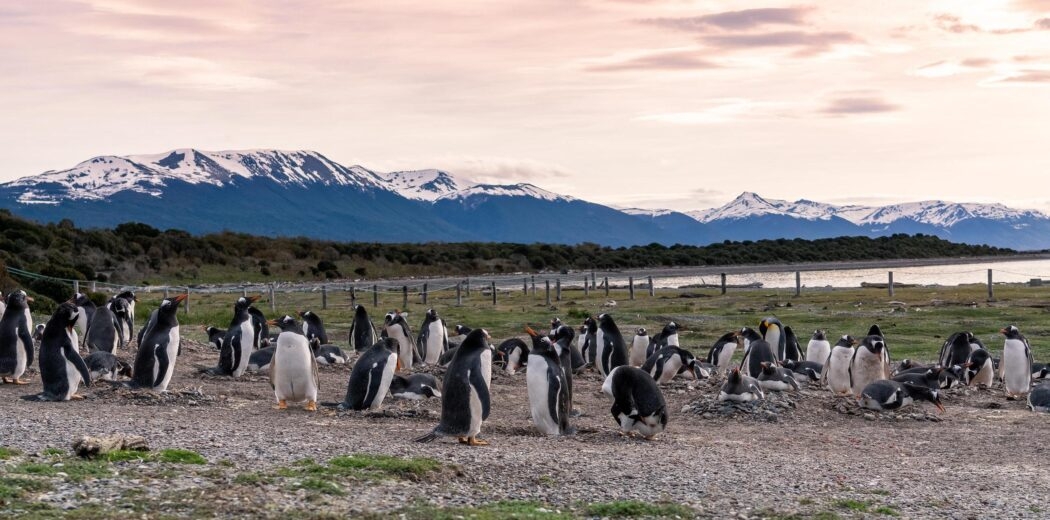
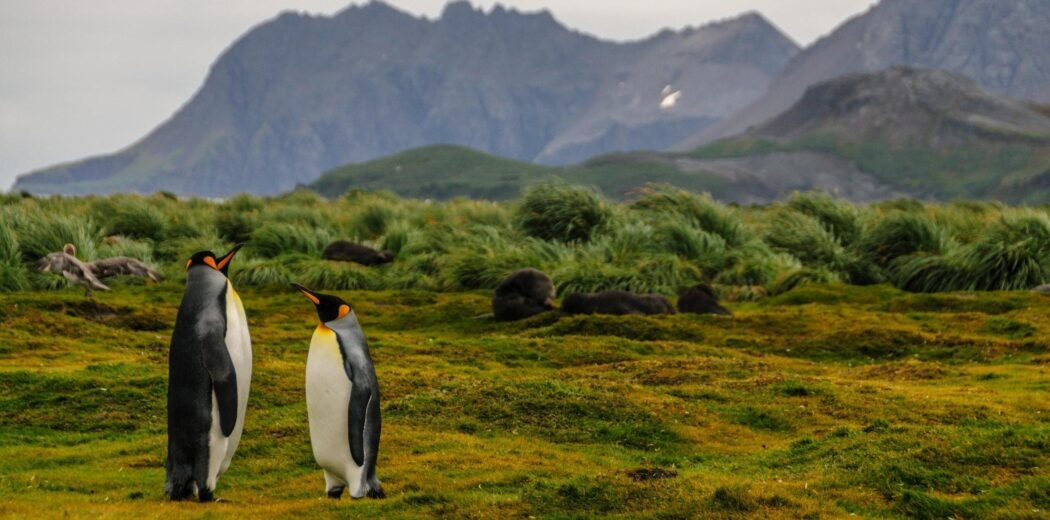
- See colonies of gentoo and Magellanic penguins in Ushuaia
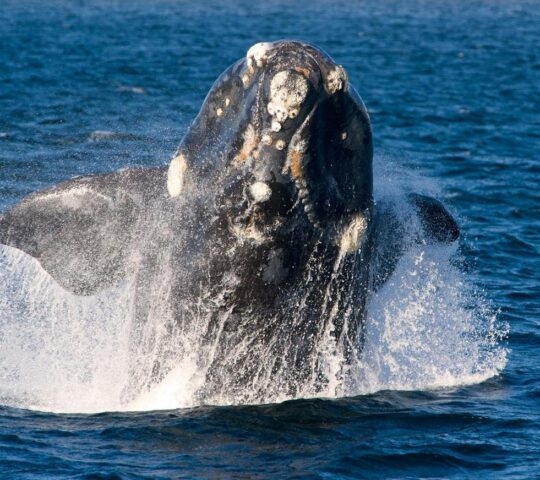
- Look for orcas and southern right whales in Peninsula Valdes
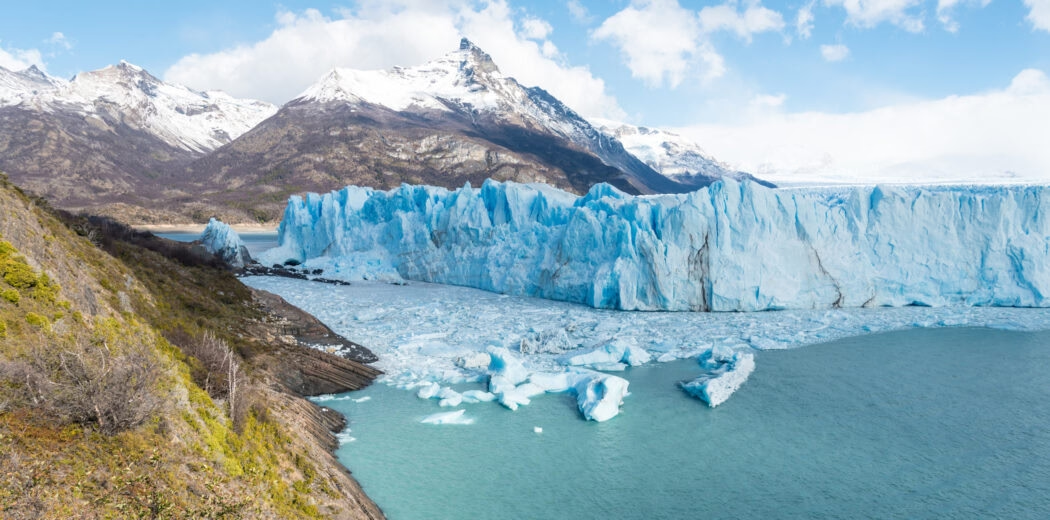
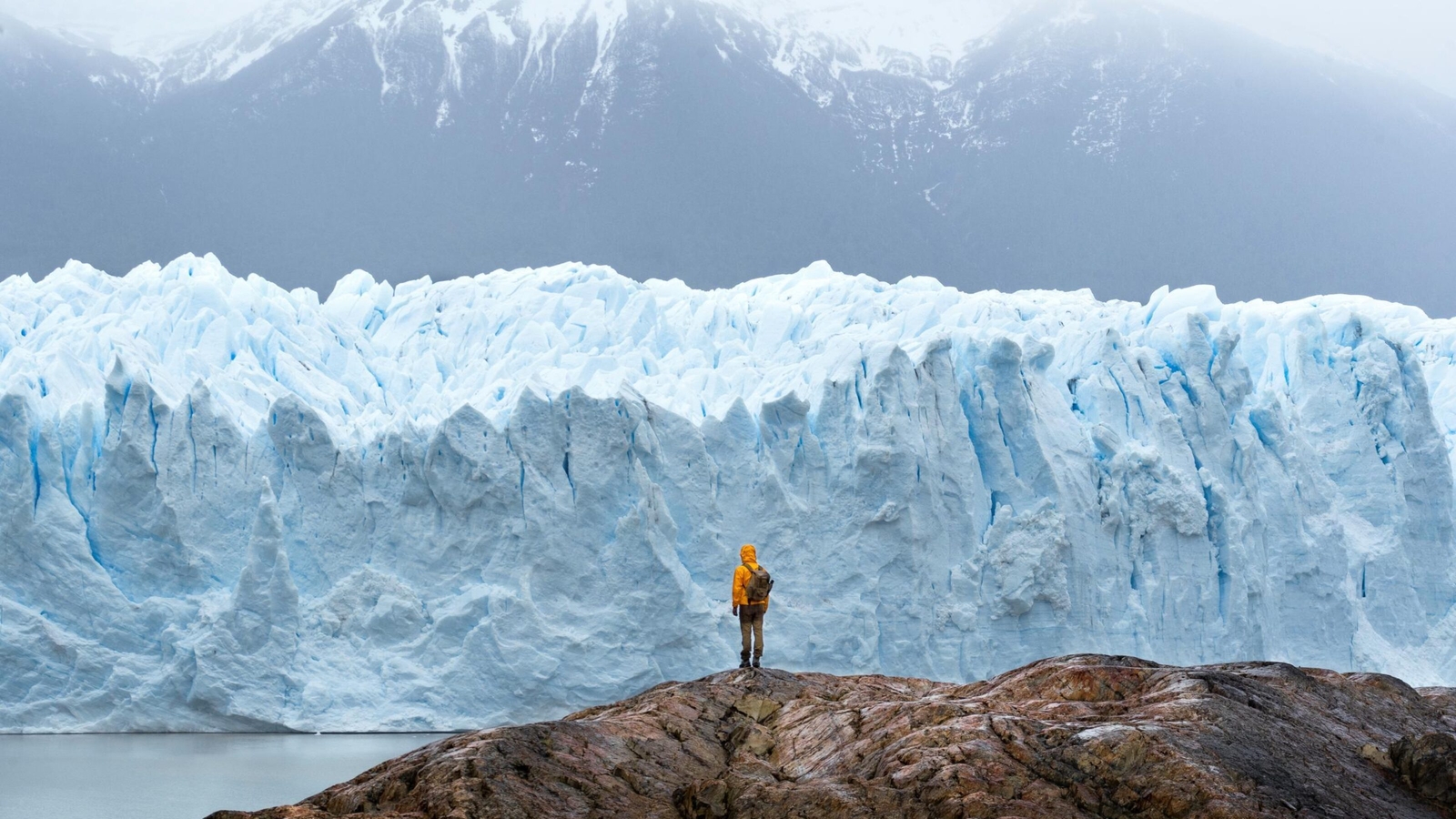
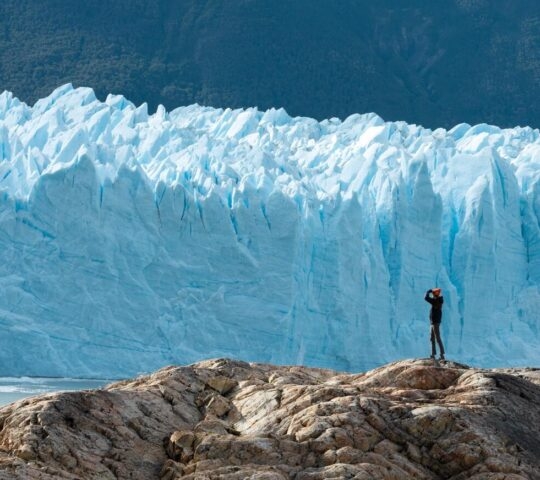
- Trek across the ice fields of Perito Moreno Glacier
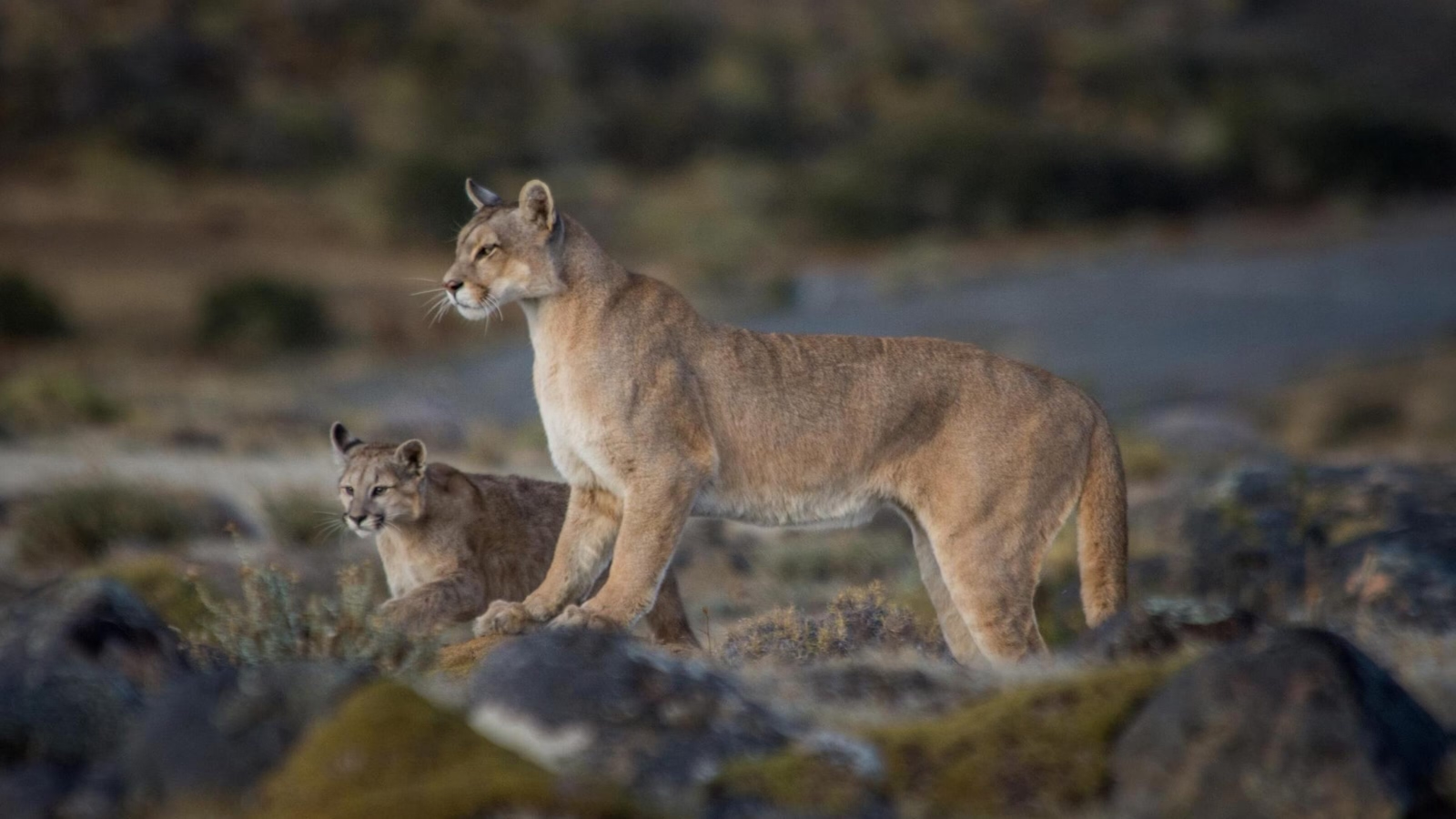
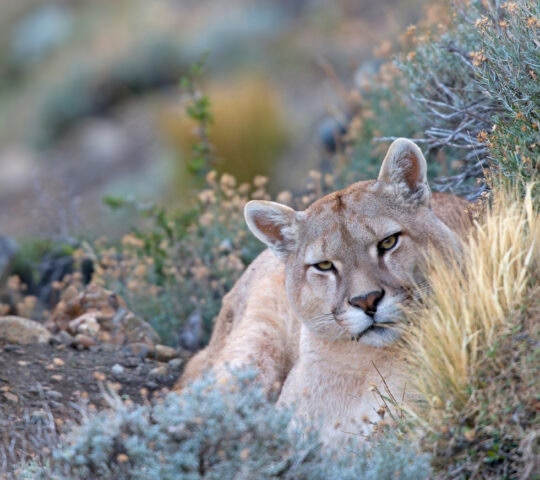
- Track pumas in Torres del Paine National Park with an expert guide
- Take in views of Santiago, and its Andes backdrop, from Cerro San Cristóbal
Our bespoke trips include
We design one-of-a-kind journeys incorporating luxury in all its forms. Our bespoke trips include:
- Luxury accommodation throughout
- Privately guided tours
- Private transfers
- Meticulously selected experiences
- Expertise and support from your Jacada Concierge
Itinerary in detail
Every Jacada trip is tailored to your personal preferences and interests. Below you’ll find a sample itinerary to inspire your journey.
Days 1–3
Explore the neighbourhoods of Buenos Aires
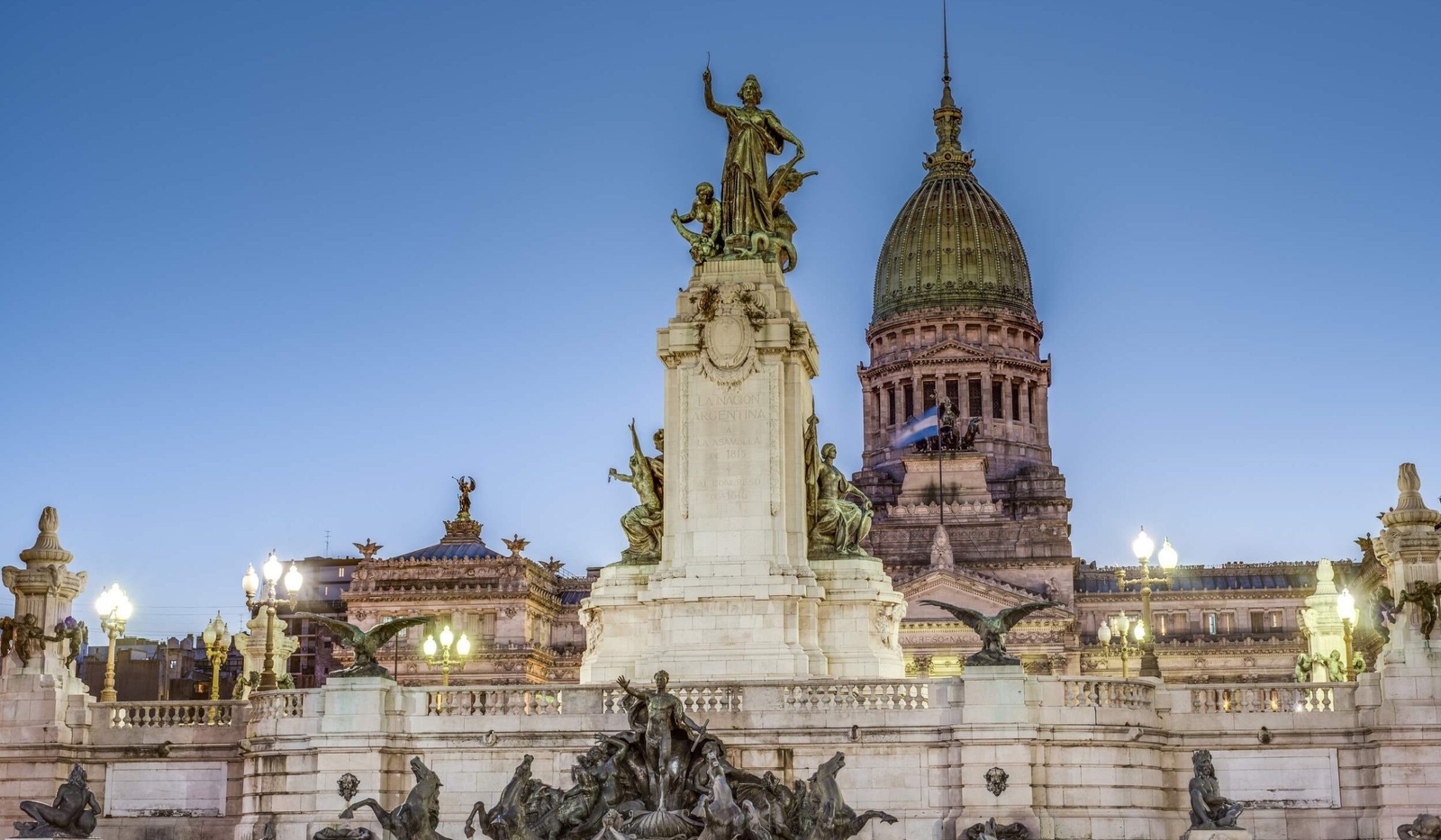
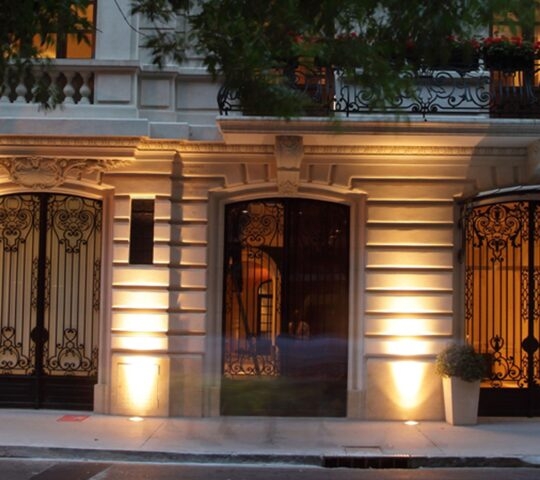
Start your adventure in style with a stay in Buenos Aires. Argentina’s capital is sometimes called ‘the Paris of South America’ due to its café culture, broad, tree-shaded boulevards and European architecture.
It also has a style that’s distinctively porteño – a word you’ll hear many residents use to describe themselves. Elegant squares with art deco and neoclassical buildings are backed by the skyscrapers of Downtown.
Join locals in the cherished tradition of aperitivo hour, sipping a classic spritz at any of the pavement bars throughout the city. For dinner, typically eaten late, our team can recommend a steakhouse or a traditional bodegón.
Distinctive districts
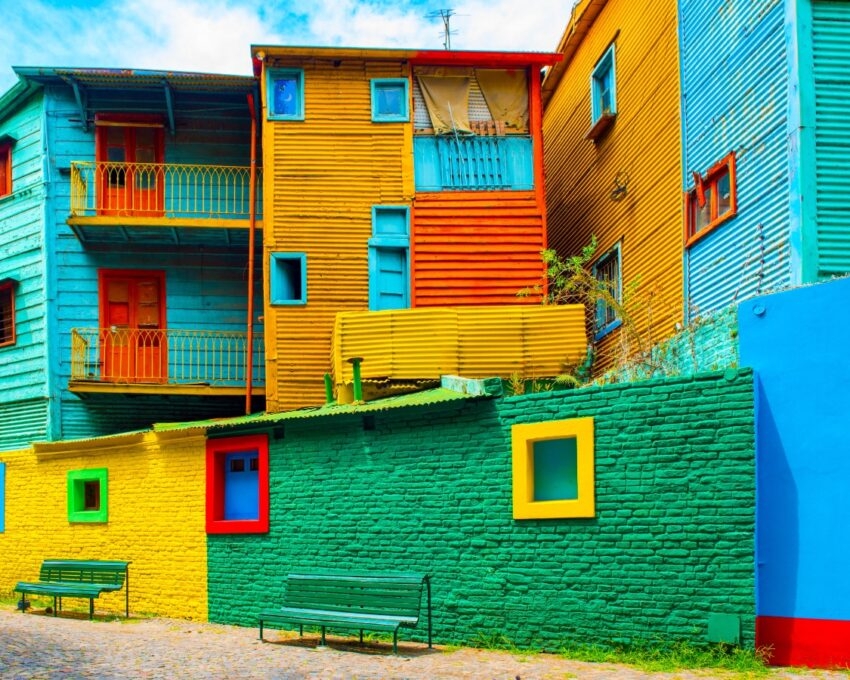
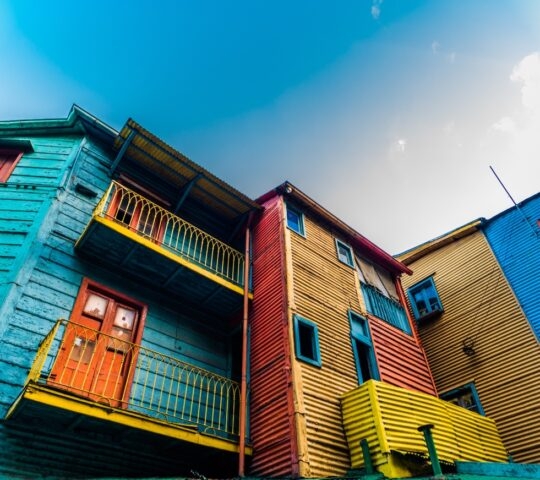
Each of Buenos Aires’ neighbourhoods reveals part of the city’s history and culture. Accompanied by a knowledgeable guide, you’ll start at Plaza de Mayo, the main square and site of Argentina’s 1810 declaration of independence from Spanish rule. Explore streets lined with colourful buildings in La Boca, one of the city’s oldest districts, whose conventillos or tenement houses remain intact. Stroll beneath jacaranda trees in Plaza San Martín in the central Retiro district and visit Evita Peron’s mausoleum at Recoleta Cemetery.
Days 3–6
Arrive at the ‘End of the World’
Ushuaia sits on the southernmost tip of South America and is the planet’s southernmost city, earning it the nickname the ‘End of the World’.
The gateway to Antarctica is suitably ethereal. This small city is partially located on the hillsides of the Tierra del Fuego archipelago, clustered between the Martial Mountains and the Beagle Channel. The streets and buildings reach down to the waters edge and look out over channel and islands and fjords within it. The Southern beech trees, or ‘flag trees’, are permanently bent in the direction of prevailing winds.
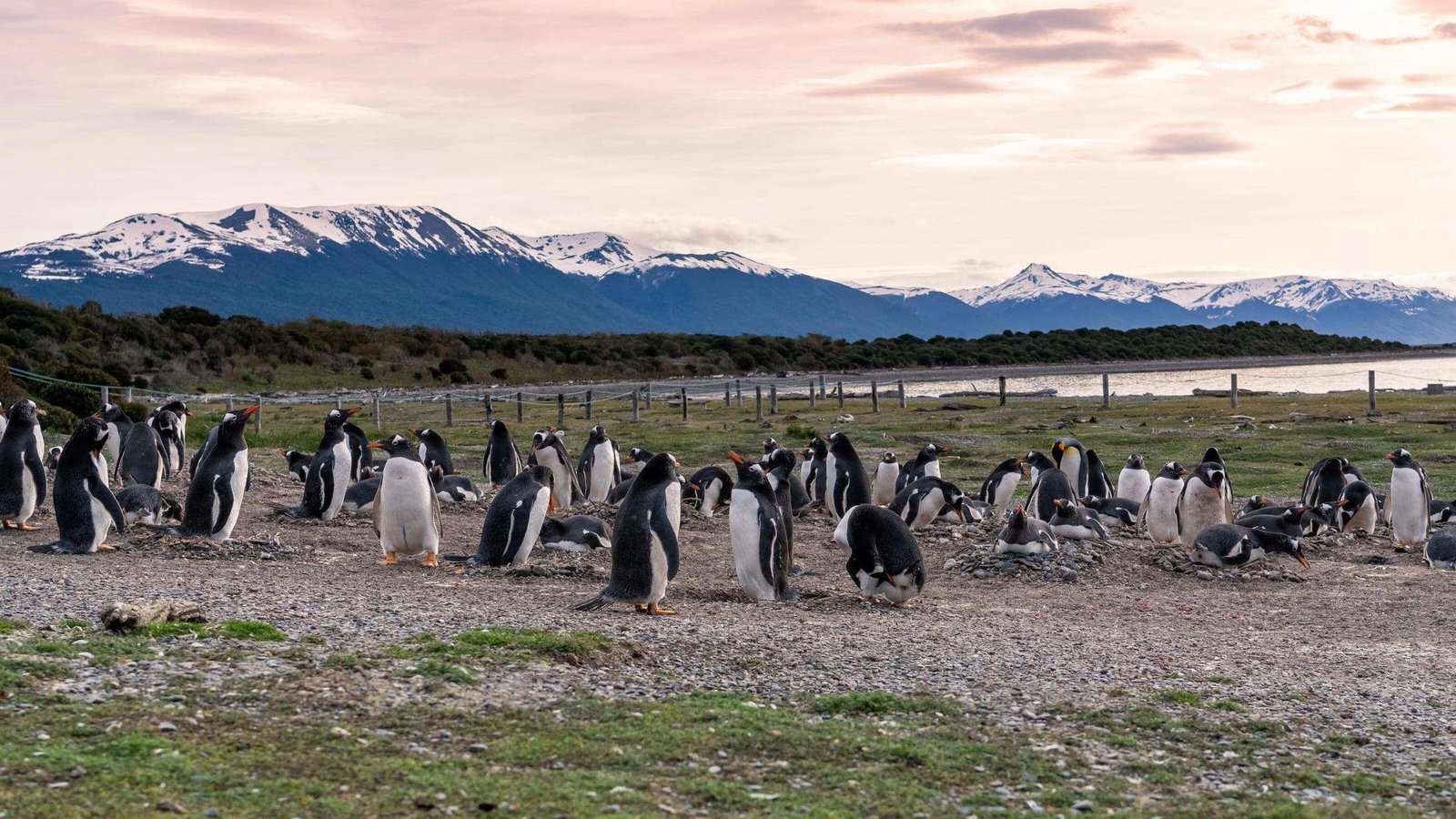
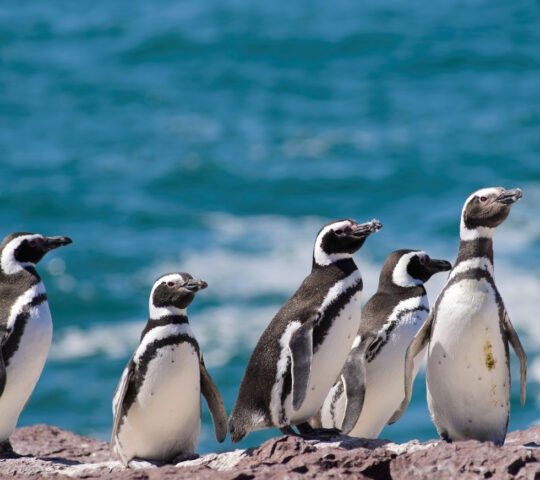
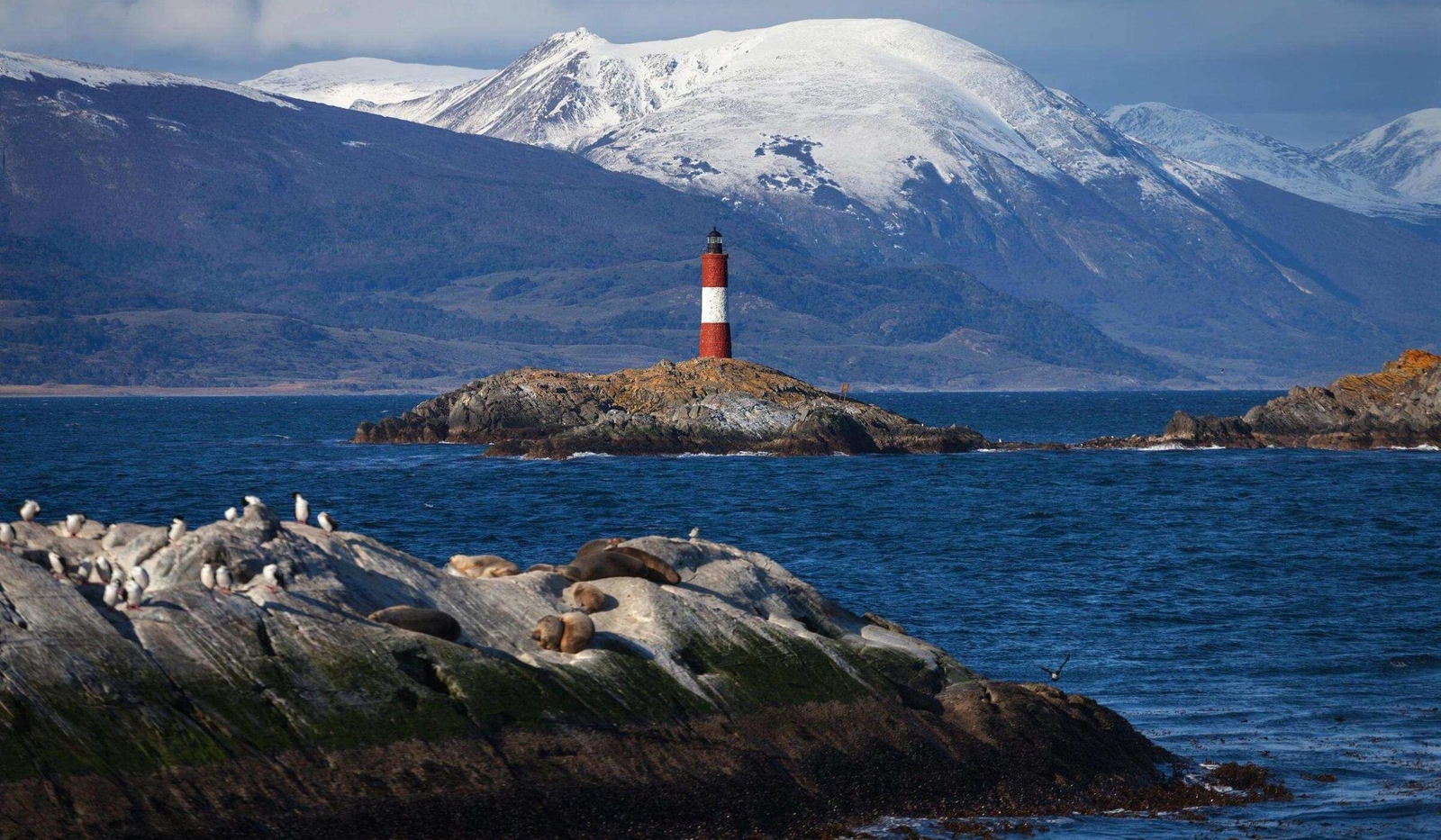
Many of your safari excursions in Ushuaia will depart from the harbour, offering opportunities to view sea lions, colonies of Magellanic and gentoo penguins and the red-and-white striped Les Éclaireurs Lighthouse.
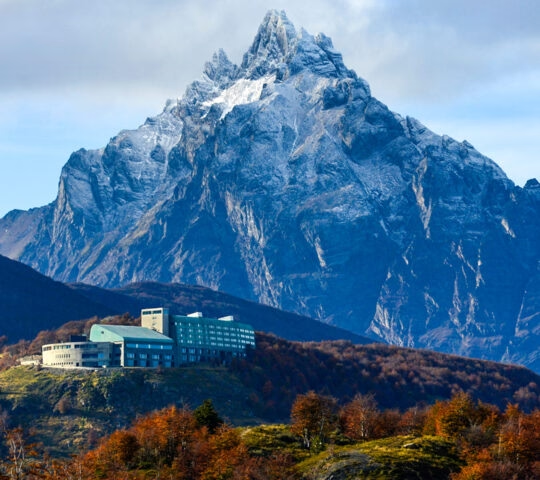
Into the wild
Paddling and penguins
Tierra del Fuego birdwatching
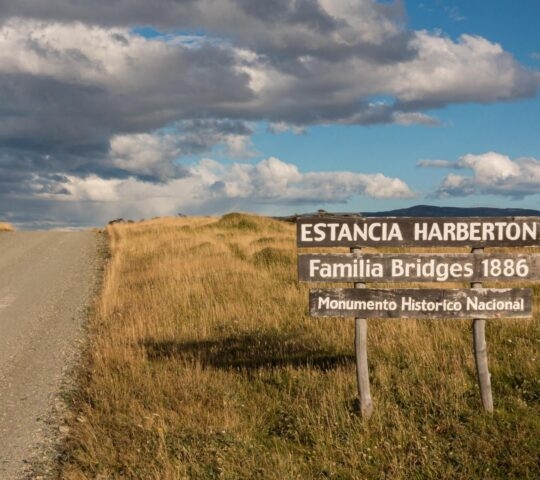
Delve into nature and history from the water
The forest-lined Lashifashaj River flows into the Beagle Channel before emerging on the open sea. On this history and nature rich tour, you’ll follow its journey with a paddle in inflatable canoes. Pass an island inhabited by rock cormorants and seals before touring Estancia Harberton, an old ranch offering a remarkable insight into life here. Then, travel by motor boat to Isla Martillo, home to gentoo and Magellanic penguins, finishing with a hike on Gable Island, home to the ruins of ancient Yámana settlements.
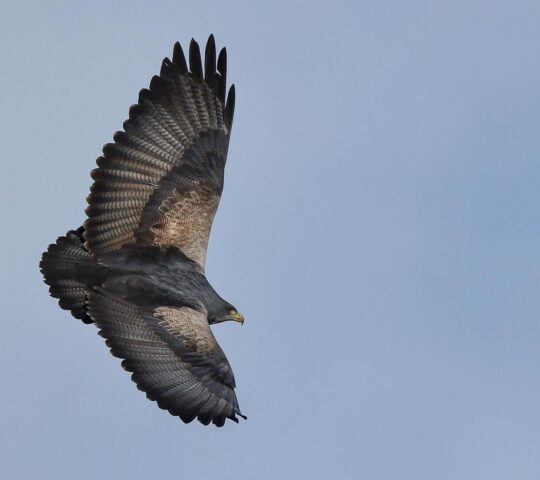
Explore the national park by foot and by boat
Tierra del Fuego National Park’s distinct landscapes combine beech forests, mountains, marine life and glaciers. Start your immersive tour with a forest trek to a lookout over Lake Acigami, looking for resident birds including magellanic woodpeckers, black-chested buzzards and Andean condors. Lunch is served, riverside, in a heated dome tent. You’ll finish with a boat ride along the Ovando River to Lapataia Bay, home to albatrosses and steamer ducks.
Days 6–9
Marine life in Peninsula Valdes
A narrow band of land connects Peninsula Valdes to the mainland. Arriving here, it’s easy to imagine you’re completely at sea. Its seemingly endless coastline interlaces bays, islets, lagoons, mudflats, sandy beaches and pebbly coves, backed by rocky cliffs. Very few people live here, with most residing in the village of Puerto Pirámides, once a transport hub for the salt-mining industry.
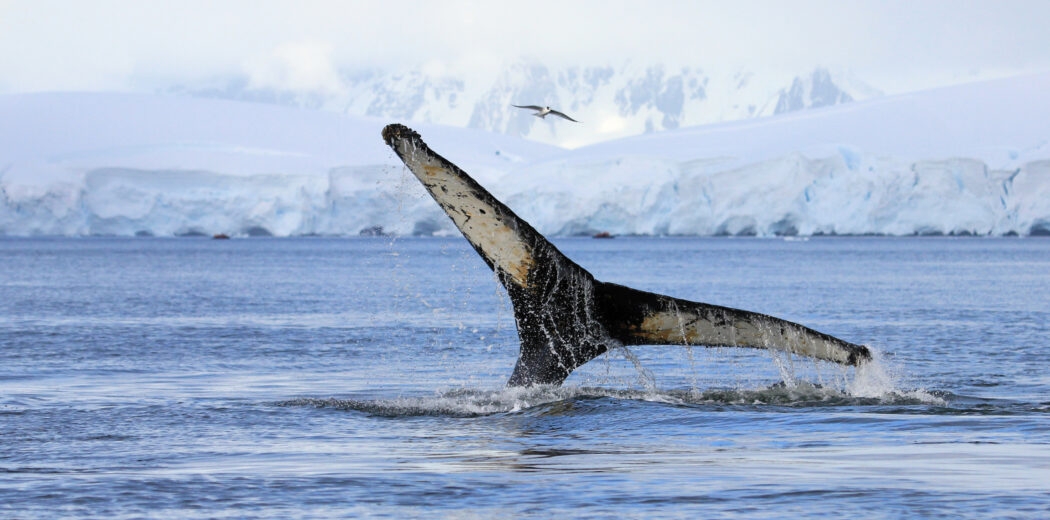
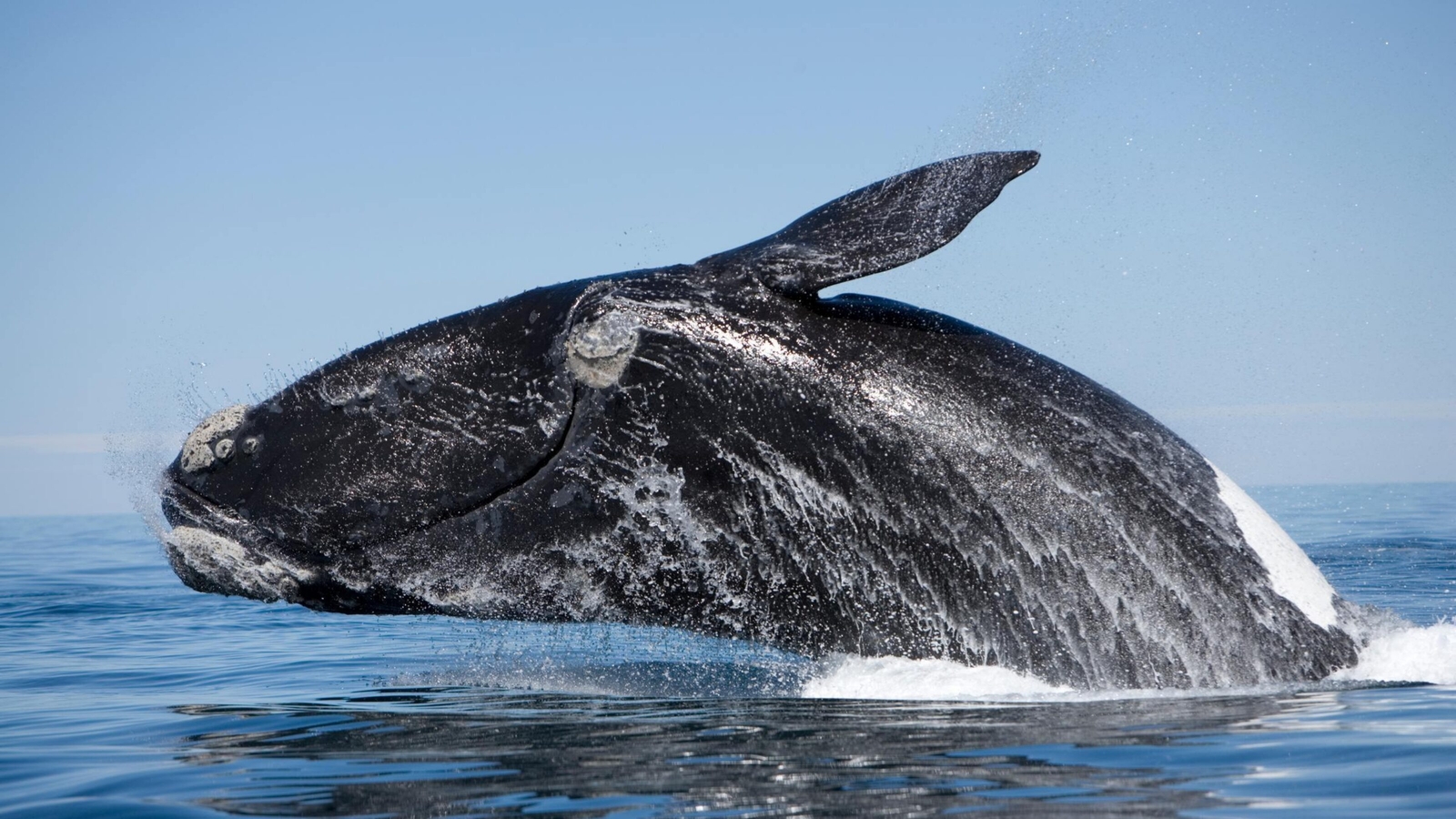
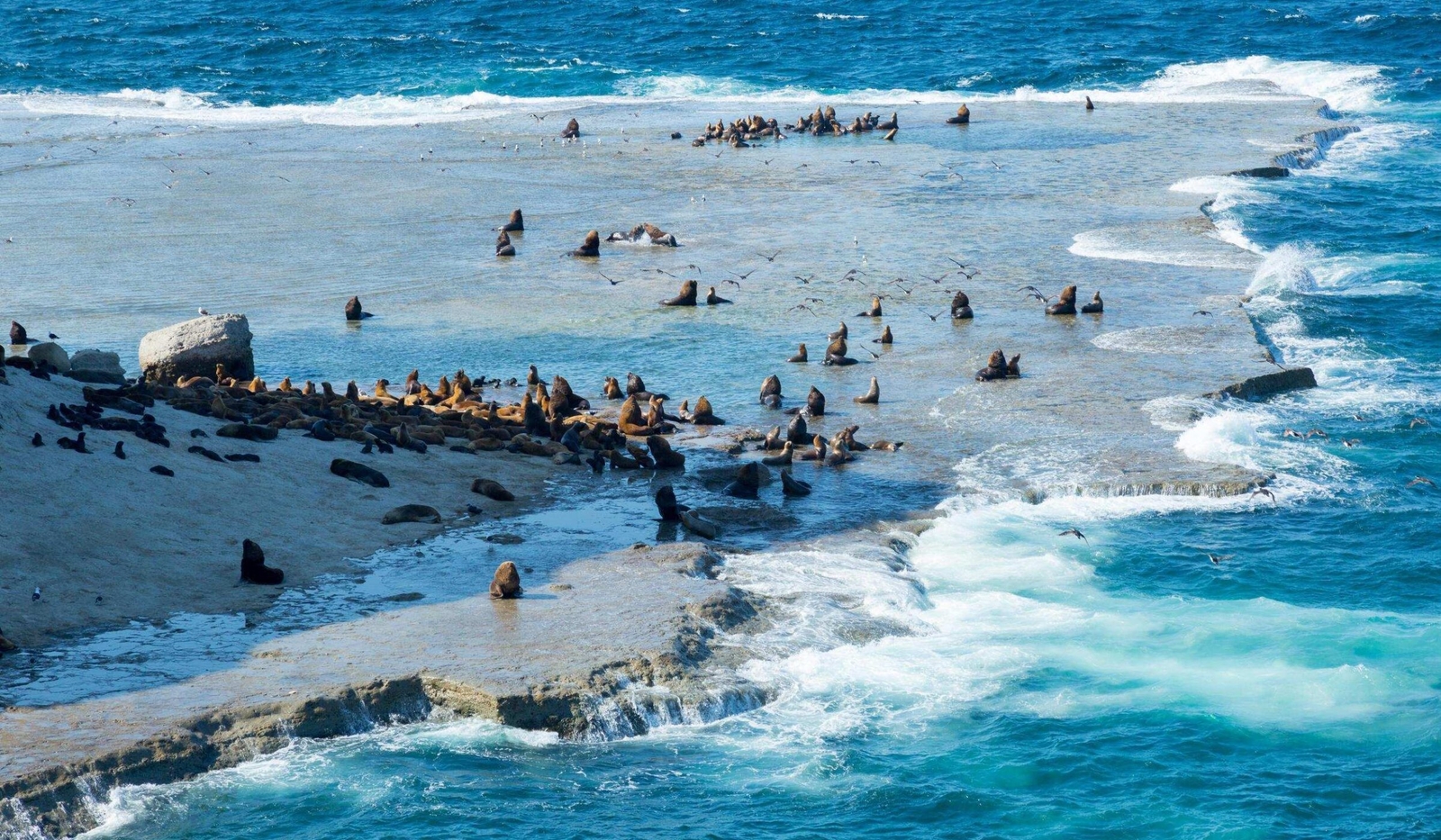
The nature reserve is justifiably famous for incredible marine life. Across three unforgettable days here, you’ll discover why. The waters here provide important breeding grounds and habitat for orcas, elephant seals and sea lions. And look out for southern right whales, who migrate here to breed and birth their calves.
Make it mine
The reserve in depth
Whale watching
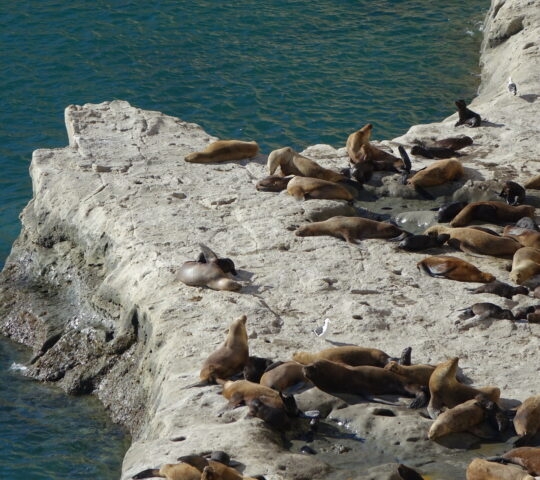
Take an immersive tour of Peninsula Valdes
On an early guided drive through the Patagonian Steppe, or desert, scour the flat, grey expanse for rheas, similar to ostriches. You’ll enter Peninsula Valdes reserve via a narrow strip of land, flanked by vast gulfs. Learn about the reserve’s history and biodiversity at the San José Fort regional museum before seeing its wildlife – including a colony of grunting elephant seals – first hand.
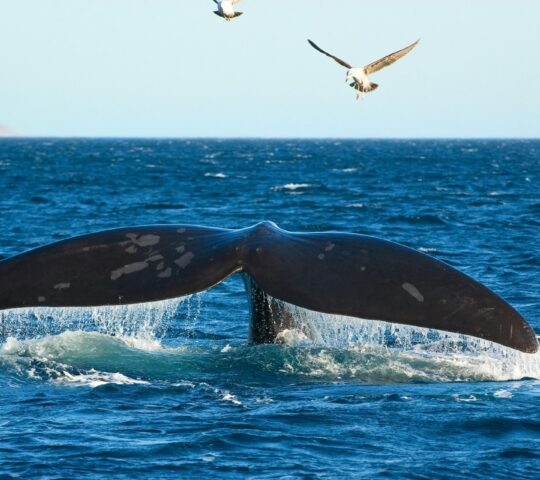
Look for southern right whales
Between June and December, southern right whales arrive in the calm waters of Golfo Nuevo in Peninsula Valdes to mate and to give birth to their calves. Pregnant females, with a gestation period of 10 months, arrive towards the end of winter. You’ll look for the grey, white-bellied mammals from onboard a catamaran. If you’re lucky, you might spot mothers teaching their calves to breach.
Days 9–11
Glaciers in El Calafate
The gateway to Los Glaciares National Park, the town of El Calafate sits on the edge of the Southern Patagonian Ice Field. The biggest attraction here is the Perito Moreno Glacier, and you’ll spend the bulk of your time exploring its shifting mass.
On a private tour, you’ll view the glacier from different vantage points, while also scanning surrounding heathers and rocky outcrops for red and grey foxes, Patagonian hares and armadillos. The glacier is one of few in the world that’s advancing, not retreating. See its tall, turquoise ice walls up close, and follow purpose-built walkways as your guide explains the environmental and local importance of the glacier.
In town, visit the Glaciarium, a museum dedicated to glaciers, housed in a building modelled on icebergs. And head to the main street, Avenida del Libertador, for craft breweries and souvenir shops.

Days 11–14
Icebergs and mountains in Torres del Paine
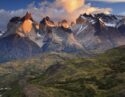
Torres del Paine National Park is a designated UNESCO Biosphere Reserve in Chilean Patagonia. The name, translating as ‘towers of blue’, refers to a trio of granite peaks rising sharply above the rest of the park.
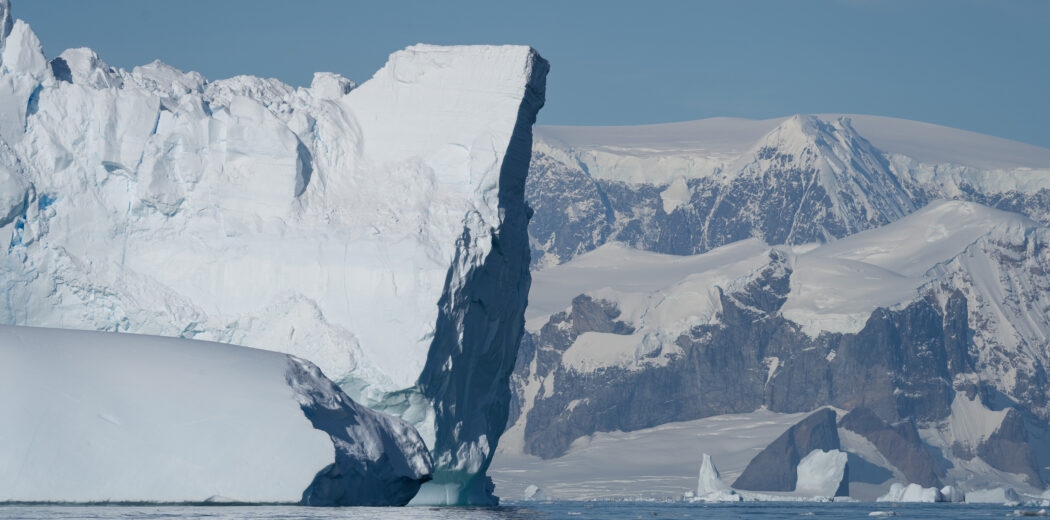
They share the landscape with glacial lakes, blue icebergs – cleaved from glaciers – and the jagged, horn-shaped mountains of Cuernos del Paine. The result is an area of incredible natural beauty that’s more than the sum of its parts.
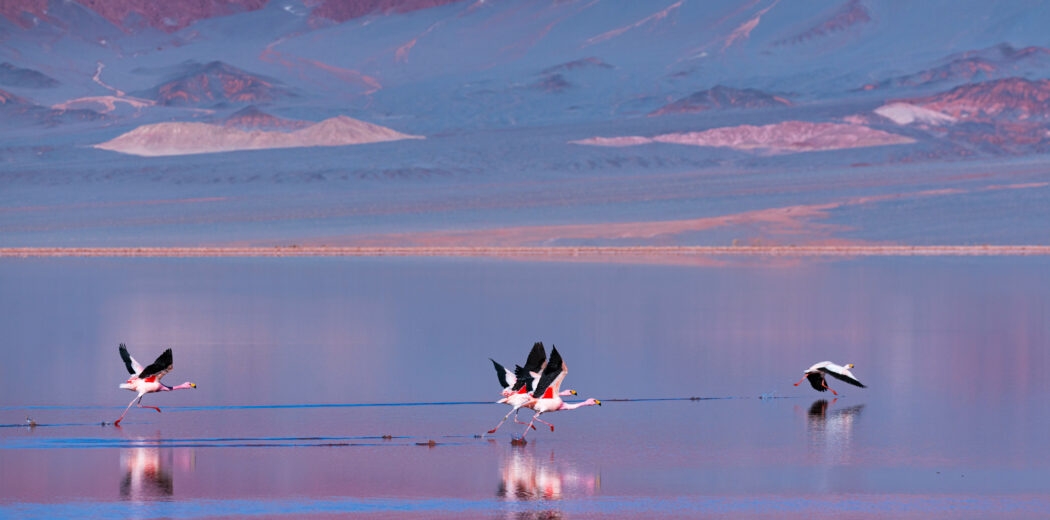
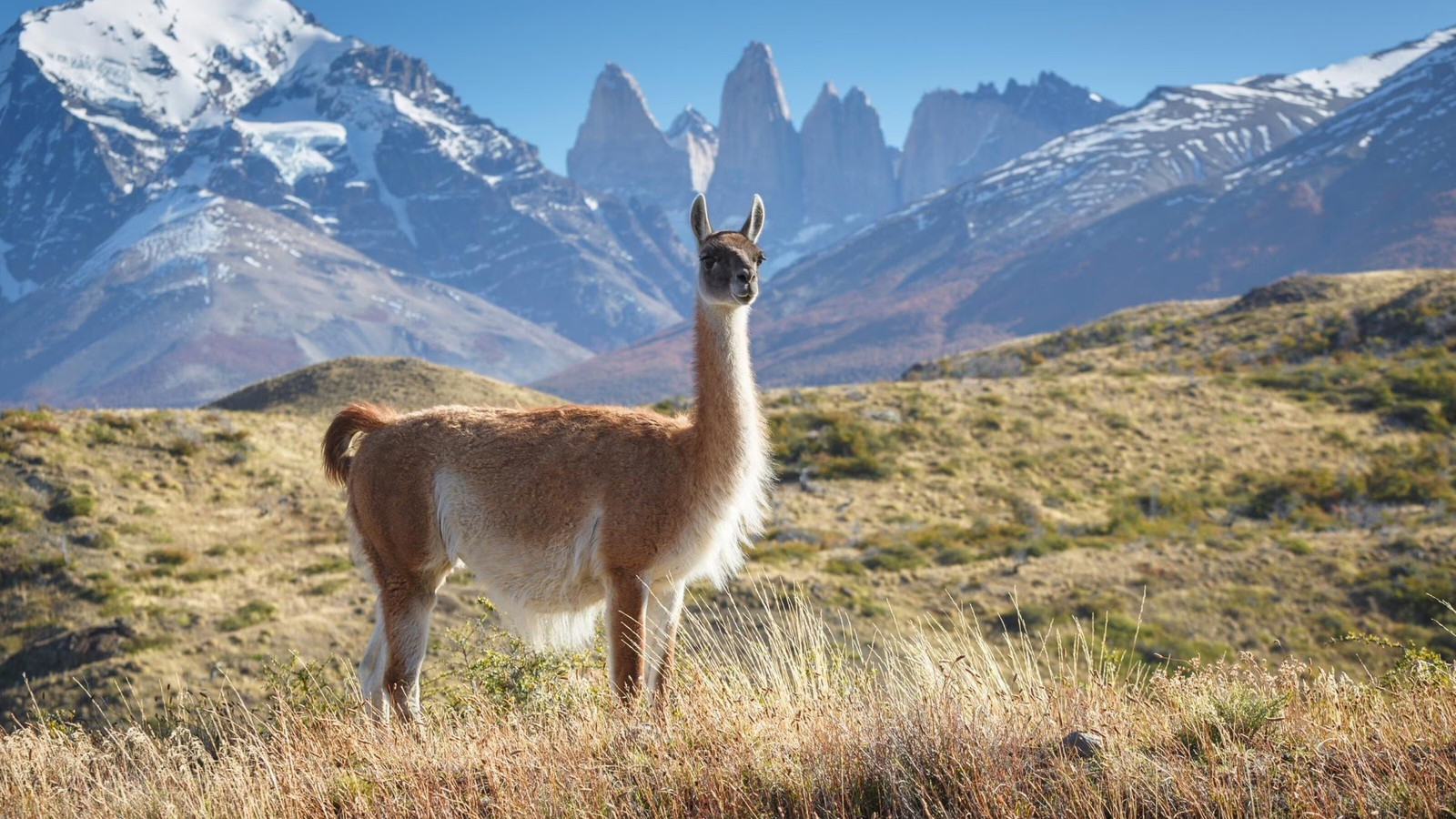
The diversity of landscapes is mirrored by the wildlife here. Golden grasslands are home to guanacos, native camelids related to llamas. More than 100 bird species found here include Andean condors, Chilean flamingoes and magellanic woodpeckers, with distinctive black plumage and red heads. You’ll also spend time searching for the area’s most captivating creatures: pumas.
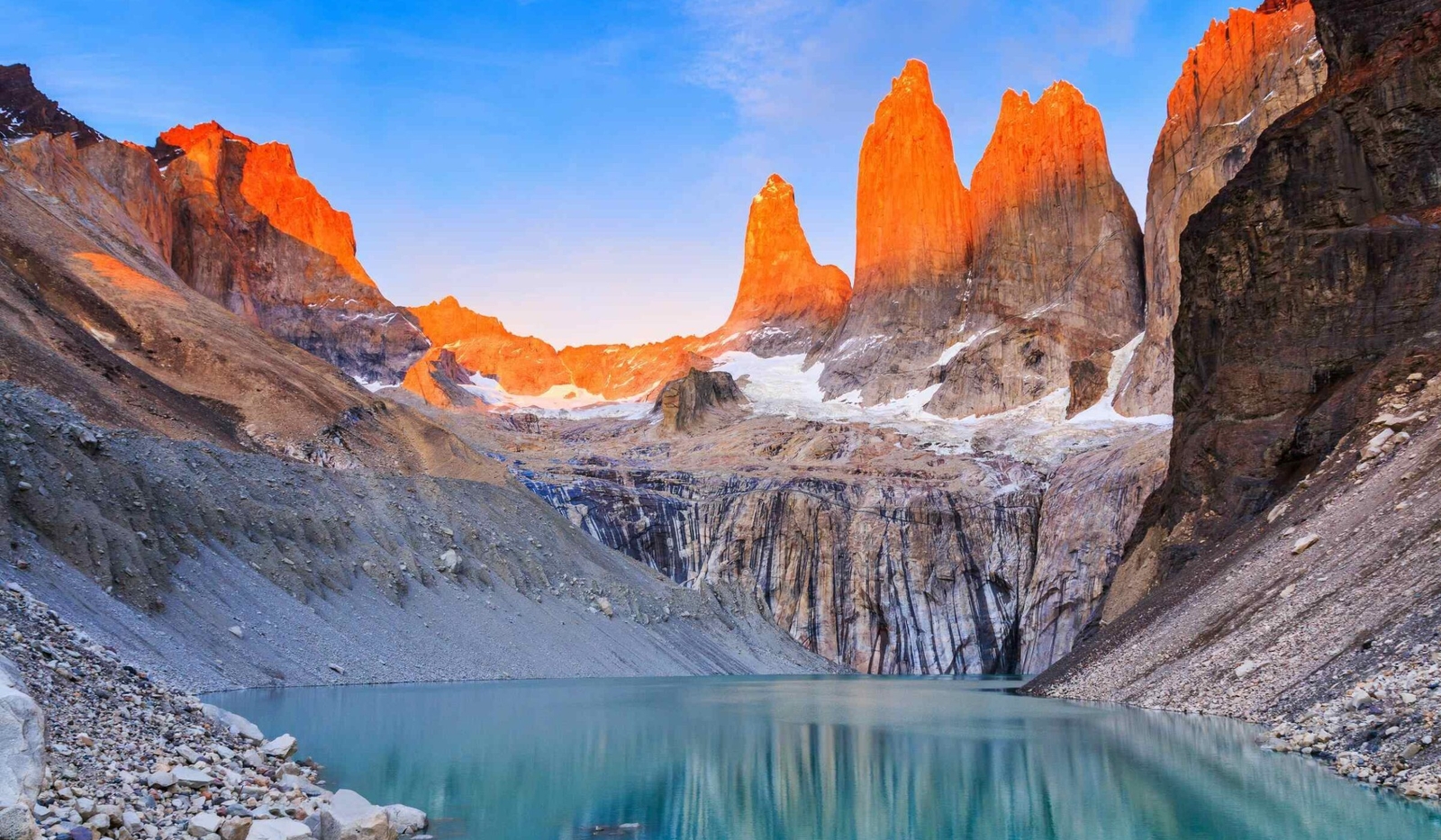
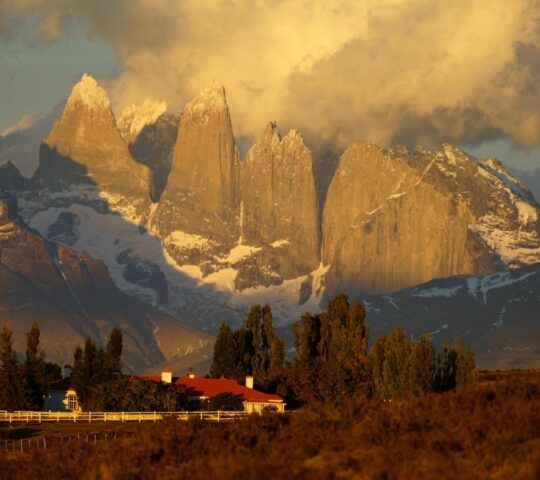
Puma tracking in Torres del Paine
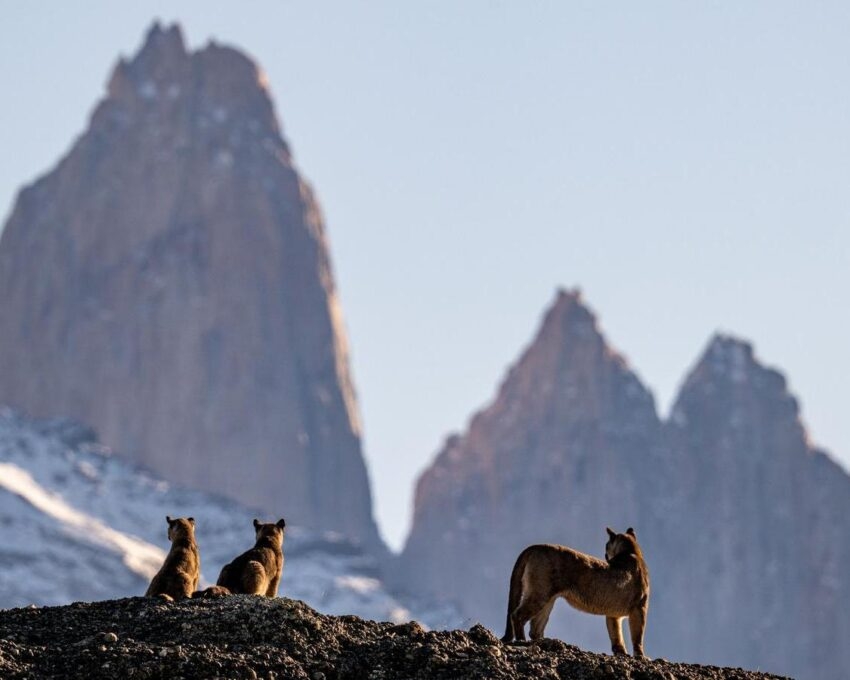
Torres del Paine National Park is among the best places to spot pumas in the wild. They’re most active at sunrise and sunset. Head out on an organised expedition for the best chance of spotting the big cats prowl across the Patagonian Steppe. You’ll be accompanied by local guides who know the land, and the pumas’ habits, best. Together, you’ll track the animals’ usual routes, and seek out the places where they rest or raise their cubs.
Days 15
A night in Santiago
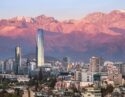
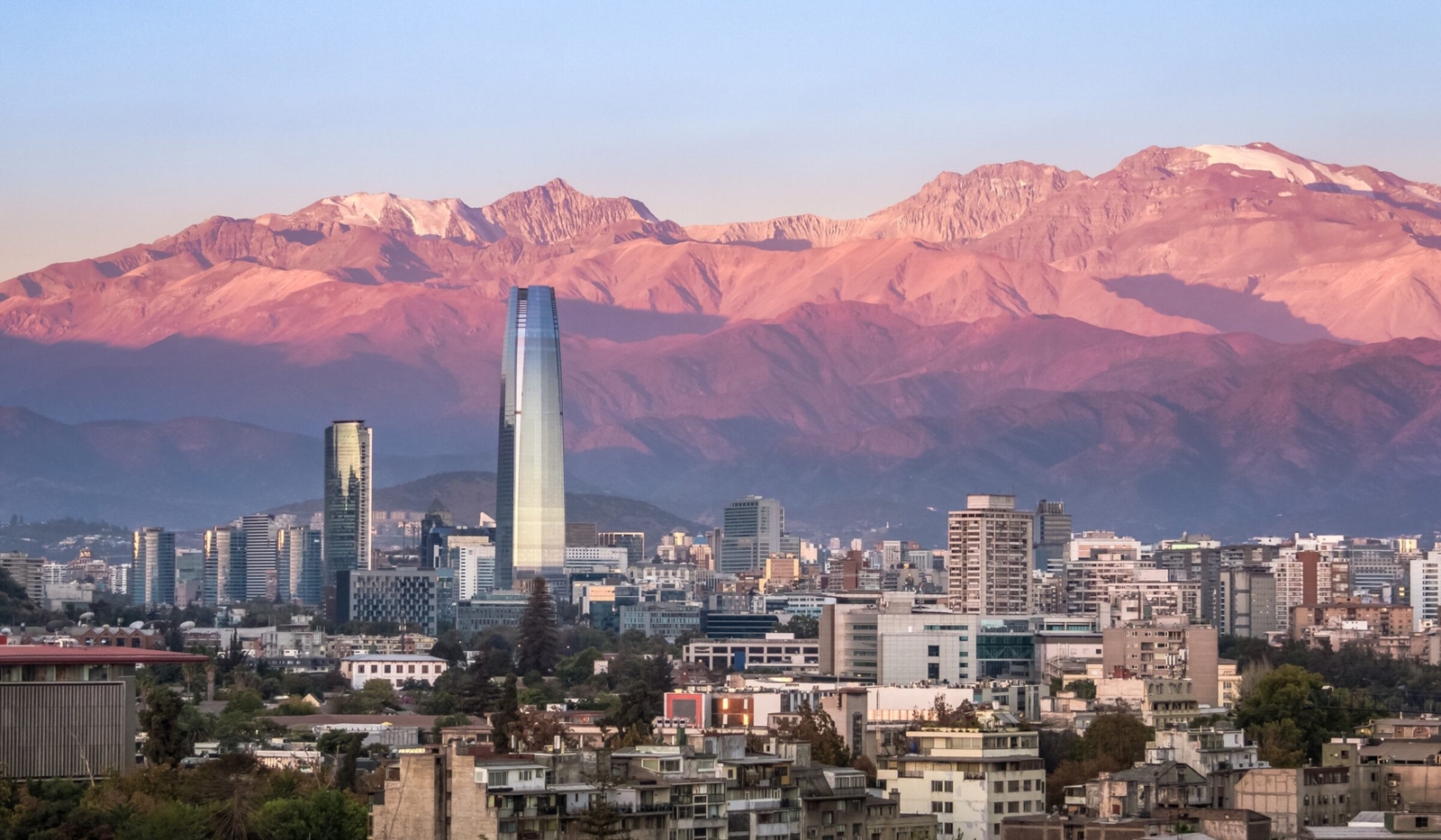
Chile’s capital, Santiago, is dizzying. Especially when viewed from 2,820 feet above sea level. A ride on the funicular railway to Cerro San Cristóbal is one of the best ways to appreciate the city’s contrasts, looking over the shiny ‘Sanhattan’ skyline that can’t quite compete with its dramatic Andes backdrop. You can also ascend South America’s tallest building, Gran Torre Santiago, for views from its observation deck.
The city fills a bowl-shaped valley in the centre of the country. Beyond its cosmopolitan heart, you’ll find arty districts with galleries, antique shops and tucked-away bars. Seek out urban wineries offering tasting flights and cellar tours, or simply raise a glass to an incredible journey.
This had to be the most seamless experience I have had traveling. Emily and Susanne where always available to answer questions. We went to 4 different areas in Argentina and Chile. Upon arrival in each city, there was always some one to greet us and take us to the hotel. The guides we had through out the trip were A+.…
Why book with Jacada

Personalised design
We’ll plan your trip around your personal interests, tastes and preferences, providing honest advice based on first-hand knowledge.

Authentic experiences
Our expert guides and brilliant Concierges are hand-picked for their ability to bring your destination to life with care and passion.

Positive Impact
We seek out unforgettable experiences that benefit both local communities and the environment.