A Guide to Visiting the Great Barrier Reef


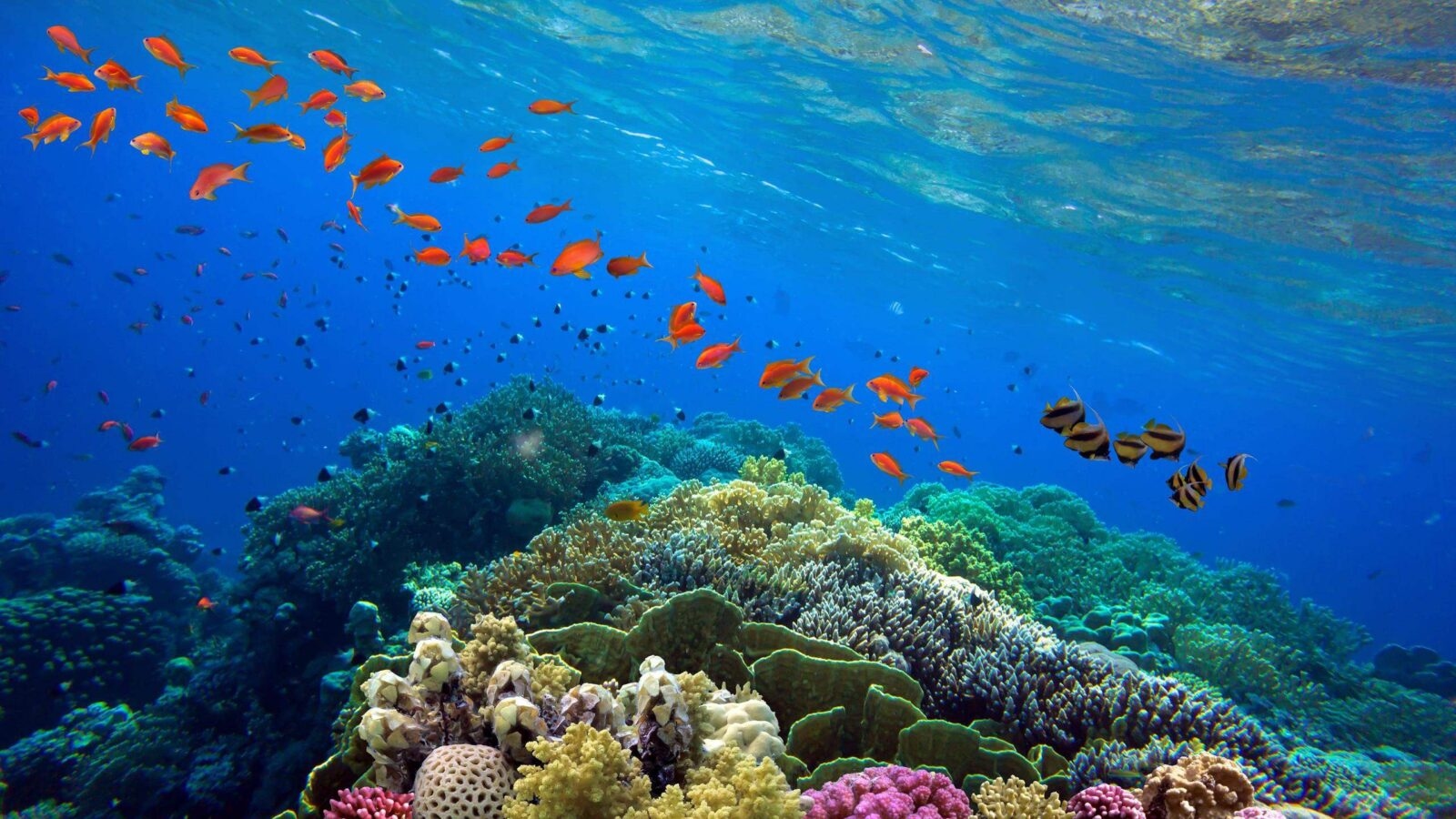
The Great Barrier Reef is among the world’s most outstanding natural wonders. It stretches from Australia’s northernmost tip down the country’s eastern edge, running roughly parallel to the coastline of Queensland for more than 2,300 kilometres (1,400 miles). The reef is home to over 9,000 different species, including fish, molluscs, sharks, whales, turtles and more.
There’s no question that it’s among the best coral reefs in the world – not to mention the largest – but what’s the best way to visit the Great Barrier Reef? We’ve asked our expert travel designers for some insight on when to go, how to get there, what to do and where to stay, plus tips for enjoying the reef responsibly. Here’s our ultimate guide to visiting the Great Barrier Reef.
The Best Time to Visit the Great Barrier Reef
The best months to visit the Great Barrier Reef are June–October, when the weather is cooler and drier and the waters are clear. April and May also offer good conditions with smaller crowds just outside of the peak season. You can expect temperatures ranging from 17–30ºC (63–86ºF) between April and October.
Although the best season to visit the Great Barrier Reef is generally winter (June–August in the southern hemisphere), late autumn and early spring can also be nice. November–March bring higher temperatures, rainier weather, lower visibility and a greater likelihood of encountering box jellyfish. If you’re travelling during these months, consider heading south; summer is the best time to visit Australia’s southern islands like Tasmania and Kangaroo Island.
How to Get to the Great Barrier Reef
The best way to get to the Great Barrier Reef is by flying into Northern Queensland and then departing from a coastal town like Cairns or Port Douglas. The only international airport in the region is Cairns Airport, but most visitors arrive via domestic flights or connections through Brisbane.
We highly suggest incorporating your trip to the Great Barrier Reef into a larger tour of Australia; it would be a shame not to see the rest of this vast country (or at least some of it) while you’re there. We can arrange a coast-to-coast Australian adventure including Queensland, the Top End and Western Australia – or whatever destinations you have in mind.
Top Attractions Near the Great Barrier Reef
As if the reef itself weren’t reason enough to go, there are also plenty of other incredible places to visit near the Great Barrier Reef. For a truly epic trip, add one (or all) of these attractions to your itinerary.
Cairns
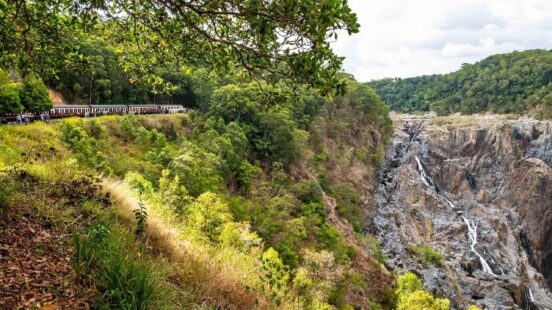
The city of Cairns is known as the gateway to the Great Barrier Reef, but it’s also a fantastic destination in its own right with a vibrant cultural scene. Take the Kuranda Scenic Railway or the Skyrail Rainforest Cableway from Cairns to the artsy village of Kuranda, or head farther north to the tropical Daintree Rainforest and the remote outpost of Cape Tribulation.
Lizard Island
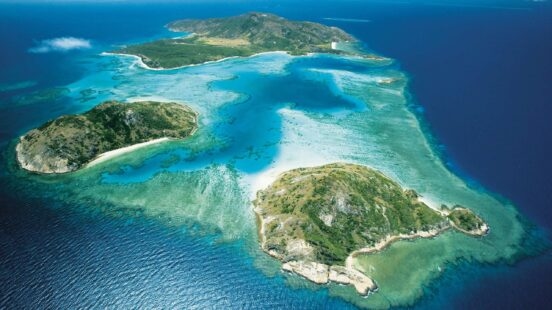
It doesn’t get much more secluded than Lizard Island, one of the 900 islands on the Great Barrier Reef. All the way at the reef’s northern end, this little piece of paradise is home to just one hotel – the exquisite Lizard Island Resort – and is part of the Lizard Island National Park. It’s the perfect choice for those seeking out remote travel.
Whitsundays
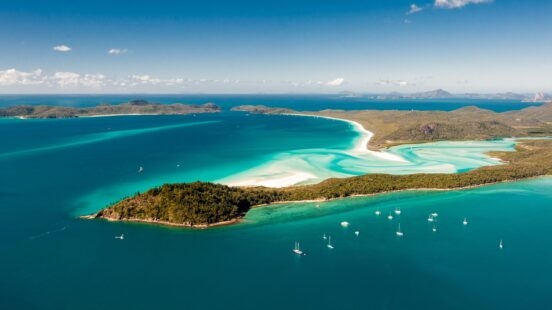
The Whitsundays are world-renowned for their stark white sand, turquoise waters and privileged location in the heart of the Great Barrier Reef. These 74 islands are home to some of the best beaches in Australia (and arguably the world) including the legendary Whitehaven Beach.
Top Activities on the Great Barrier Reef
There’s plenty to do on the Great Barrier Reef, whether you’re ready to dive down and explore the magnificent underwater world or you’d rather stay above the surface. Here are the top activities recommended by our team of travel designers.
Scuba diving
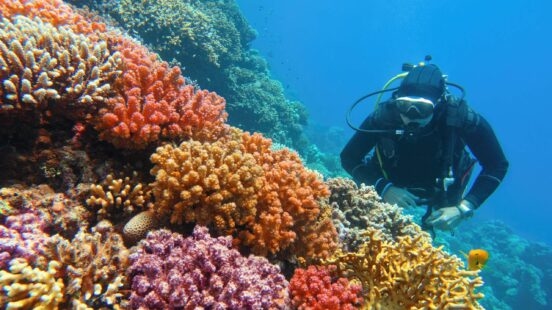
Scuba diving is the best way to experience the marvels of the Great Barrier Reef up close. Along with the coral that comprises the reef itself, you’ll have the chance to spot Australia’s ‘Great Eight’ – whales, sharks, sea turtles, manta rays, giant clams, clownfish, potato cod and Maori wrasses – as well as dugongs and dolphins.
Snorkelling
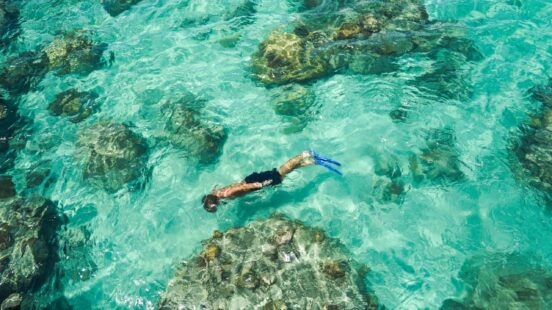
If you’re not ready to commit to the full scuba experience, snorkelling is also a wonderful way to see the world beneath the waves. In some places you can access gorgeous reefs directly from the beach, but it’s worth hopping on a boat for a guided expedition with an expert who will take you to the most scenic spots and let you know what to look for.
Glass-bottom boat tours
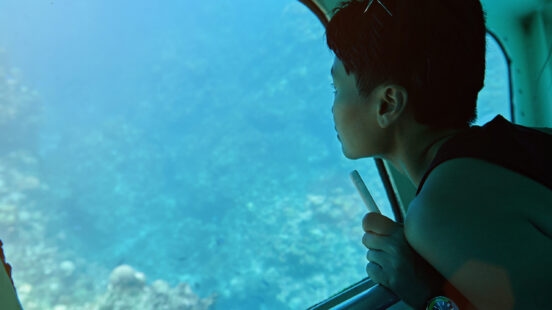
Glass-bottom boats allow you to observe the marine environment without even getting your feet wet. This is the perfect choice for travellers who can’t swim (or would simply prefer not to) and groups of people with different preferences; some passengers can dive or snorkel off the side of the boat while others stay on board.
Private yacht adventures
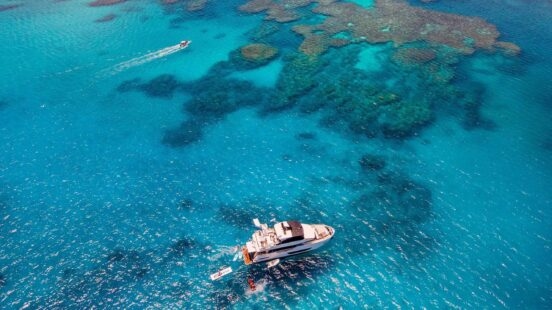
Cruises are an excellent way to enjoy the Great Barrier Reef in comfort. Luxury vessels feature air-conditioned cabins, sun decks, diving equipment and plenty of opportunities to explore the natural splendour around you – whether with a scuba tank, snorkel, stand-up paddle board or kayak.
Environmental Issues & Conservation Efforts
Today the Great Barrier Reef is at significant risk from rising water temperatures, pollution, overtourism and other threats. Many scientists and activists are already working hard to prevent consequences like coral bleaching and the loss of biodiversity. Fortunately, it’s possible to visit the reef in a way that not only avoids hindering these efforts, but can actually help them.
The first step is to choose accommodation and experiences that directly support environmental protection. One shining example is Orpheus Island Lodge, a stunningly secluded resort in Hazard Bay with conservation at its core. A small portion of the profit from every stay here goes to the Reef Keepers Fund, and the lodge also participates in local environmental education programmes and offsets carbon emissions through the WithOneSeed project in Timor Leste.
Whatever you want from your adventure on the Great Barrier Reef, are travel designers are ready to help:
Trip Inspiration

Great Barrier Reef FAQs
The Great Barrier Reef unfurls its spectacular beauty off the coast of Queensland, Australia. This breathtaking aquatic paradise lies just offshore from Queensland’s tropical north, making it accessible from gateways such as Cairns and Port Douglas. From these beautiful coastal destinations, travellers can embark on bespoke journeys to explore the reef, whether by private yacht, luxury catamaran or scenic air transfer.
The Great Barrier Reef, a colossal living wonder, stretches across the coast of Queensland, Australia. This vast marine ecosystem is not merely a single reef, but a breathtaking collection of over 3,000 individual reefs and 900 islands, extending for more than 2,300 kilometres (1,400 miles) along the continent’s northeastern coastline. Its sheer scale is truly astounding, covering an area of roughly 344,400 square kilometres (133,000 square miles) – an area larger than the United Kingdom, or comparable to the size of Italy. The reef is visible even from outer space and is known for unparalleled diving and snorkelling experiences and the opportunity to explore coral gardens and secluded cays, accessible by private yacht.
The Great Barrier Reef teems with an extraordinary diversity of marine life. It’s one of the planet’s most important ecosystems and is a sanctuary for an astonishing array of species.
Beneath the shimmering surface you’ll discover over 1,500 species of fish of every imaginable hue. Watch for the instantly recognisable clownfish darting amongst their protective anemones, technicolour parrotfish grazing on coral and majestic Maori wrasse with their distinctive patterns.
The reef is also a crucial haven for six of the world’s seven species of marine turtles, including green, loggerhead and hawksbill turtles. Larger marine inhabitants frequently make appearances, including over 30 species of whales and dolphins. Elegant manta rays, with wingspans that can reach several metres, glide effortlessly through the water, and various species of sharks inhabit these waters. The most commonly sighted reef sharks like the white-tip and black-tip pose no threat to humans
Beyond these iconic residents, the reef system supports over 400 types of coral (both hard and soft), 4,000 types of molluscs and countless invertebrates, sponges and sea snakes, forming a complex and mesmerising underwater tapestry.
The Great Barrier Reef’s importance stems from its role as a vital ecosystem. It provides a critical habitat for an astonishing array of marine life. Beyond its biological richness, the reef acts as a natural storm barrier for the Queensland coastline, protecting it from erosion and the impact of large waves.
More profoundly, the Great Barrier Reef stands as a potent symbol of natural heritage and the urgent need for global conservation. Its beauty and delicate balance serve as a powerful reminder of the intricate connections within our natural world, offering a unique opportunity for visitors to connect with nature on an awe-inspiring scale, fostering a deeper appreciation for its preservation for generations to come. To witness its thriving ecosystems is to experience the very heartbeat of our planet’s marine biodiversity.
